
Why SimPole
Is Safer
Safer Designed. Professionally Engineered. Built to Reach.
Engineered with Safety in Mind. Built for Professional Cleaning.
Five reasons SimPole is safer
Every SimPole is designed around the whole job: the pole, the water, the brush, the electrical equipment and the roof.
Non-Conductive Designed Pole Sections
SimPole sections are designed with non-conductive construction to help reduce electrical hazards.
Advanced Carbon-Fiber Engineering
High-performance carbon fiber provides strength and stiffness for professional long-reach cleaning.
Protective Composite Construction
Protective layers shield the carbon structure and help maintain pole integrity.
Electrical Testing
SimPole telescopic pole passed a 40,000-volt dielectric withstand test for one minute without electrical breakdown.
VOLTS1 MINUTE
Designed for Solar Cleaning
SimPole takes the full job into account: water, brushes, electrical equipment, rooftop access and fall hazards.
A safer choice
for solar cleaning
- Reduce Electrical Risk
- Strong & Lightweight
- Reach Higher with Confidence
SimPole
Safer Water-Fed Pole
Clean solar panels from the ground. Stay safe.
Solar Cleaning Safety
Work Smart. Work Safe.
Keep your feet on the ground!
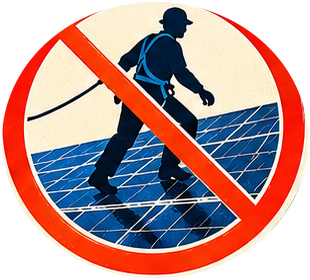
Avoid walking on
solar panels
Electrical Safety
- Solar panels can be energized!
- Keep your distance!
Fall Protection
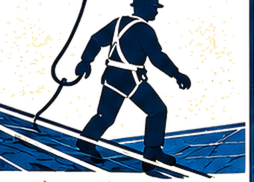
- Use a harness on roofs.
Safety Tips
- Avoid roof falls
- Follow OSHA standards
- Inspect PPE regularly
No water-fed pole makes energized electrical equipment safe to touch.
Follow OSHA requirements, electrical safe-work practices, fall protection, proper PPE, and manufacturer instructions.
The OSHA rules that matter
These are the OSHA standards that apply to window cleaning, water fed poles, solar panel cleaning and electrical safety. OSHA looks at the hazard and the work practices, not just what a pole is made of.
| OSHA rule | What it covers for window and solar cleaning |
|---|---|
| 29 CFR 1910.132 | General PPE requirements and hazard assessment |
| 29 CFR 1910.133 | Eye and face protection |
| 29 CFR 1910.138 | Hand protection |
| 29 CFR 1910.147 | Lockout/tagout for hazardous energy |
| 29 CFR 1910.332 | Training for electrical hazards |
| 29 CFR 1910.333 | Electrical work practices, overhead lines, conductive materials |
| 29 CFR 1910.334 | Use of electrical equipment |
| 29 CFR 1910.335 | Electrical protective safeguards |
| 29 CFR 1910.269 | Electric power generation, transmission and distribution work |
Overhead power lines: 1910.333(c)(3)
If work is done near overhead power lines, OSHA says the lines must be de-energized and grounded, or other protective measures must be in place, before work begins.
This matters most with:
- Long water fed poles, carbon fiber or fiberglass
- Water hoses and flowing water
- Brushes and metal fittings
- Solar cleaning equipment
A pole labeled carbon fiber, fiberglass, insulated or non-conductive is not, by itself, proof that the whole working setup is safe around energized power lines.
Solar panel cleaning checklist
OSHA treats solar work as an electrical hazard, because panels make electricity and can expose workers to shock and arc flash. Before every solar job:
- Treat electrical equipment as energized unless it is properly verified otherwise.
- Find wiring, connectors, damaged panels and exposed electrical parts.
- Keep a safe distance from electrical hazards.
- Check roof access, fall hazards and the weather.
- Wear the PPE your hazard assessment calls for.
- Stop work when an electrical hazard can't be controlled.
Training: 1910.332
Workers exposed to electrical hazards need electrical safety training for their work. Being a window cleaner does not, by itself, qualify someone to work on exposed energized equipment.
SimPole electrical safety awareness
SimPole believes safety should be a priority when cleaning windows, gutters and solar panels.
Electrical hazards can exist around overhead power lines, solar panels, wiring, water, hoses, cleaning brushes and equipment.
No water fed pole should be considered a guarantee of protection from electrocution.
Before beginning work, workers should identify electrical hazards, keep proper clearances, follow the OSHA requirements that apply, use proper PPE, and stop work whenever unsafe electrical conditions exist.
A dielectric test checks the tested equipment under the test's conditions. It is not a guarantee of safety in every real-world job.
Always follow the OSHA requirements that apply and the electric utility's safety instructions.
SimPole. Innovation in Safety.
Tested Performance. Professional Results.